
Cornwall Council leader Leigh Frost discusses Cornwall’s identity as a Celtic nation and its growing international role. From renewable energy to lithium and investment, discover the opportunities shaping its future.
At a time when regions across Europe are rethinking their place in an increasingly complex global landscape, Cornwall is quietly—but confidently—making its case.
In a conversation at the Interceltic Business Forum, Leigh Frost (Leader of the Cornwall Council) set out a vision for Cornwall that goes beyond cultural recognition. It is a vision rooted in identity, but driven by economic opportunity, international collaboration, and strategic relevance.
For Frost, Cornwall’s identity as a Celtic nation is not up for debate.
“We are a Celtic nation. That is a fact,” he says plainly.
Yet Cornwall occupies a unique and, at times, challenging position. While culturally distinct, it remains administratively part of England—without the devolved powers enjoyed by other Celtic nations such as Scotland or Wales. This creates a tension between identity and governance, one that Cornwall is increasingly seeking to address.
A key part of that recognition is language.
Frost points to the growing status of Kernewek, the Cornish language, as an important milestone in Cornwall’s journey. For Cornwall, language is not simply cultural heritage. It is a marker of identity, continuity and legitimacy.
The recognition of Kernewek at a higher official level brings Cornwall closer to other Celtic nations whose languages are already central to their national identity. It also strengthens Cornwall’s ability to present itself internationally as a living Celtic nation—not only through history, but through language, culture and public life today.
Alongside cultural recognition, Cornwall is also pursuing greater political and administrative power.
Frost explains that Cornwall is working within the current English devolution framework, even if that framework does not fully reflect Cornwall’s ambitions. The goal is to ensure that Cornwall’s devolution is not diluted by being merged into wider regional structures that do not reflect its identity as a national minority.
For Cornwall, devolution is not only about governance. It is about having the tools to act on its own economic potential—whether in energy, infrastructure, skills, investment or international partnerships.
Still, Frost acknowledges that recognition remains an ongoing challenge.
“With a population of around 600,000, we’re not always a priority for central government,” he notes. “But that doesn’t mean we’re not important.”
Instead of waiting for change, Cornwall is working within its constraints—building visibility and influence through partnerships and international engagement.
If Cornwall has historically been overlooked, that is something Frost is determined to change.
“The UK doesn’t shout about Cornwall enough,” he says. “We’ve got amazing things happening—but nobody knows about it.”
Part of his role, he explains, is to take that message beyond the region—to ensure Cornwall is recognised not just within the UK, but globally.
That effort is already bearing fruit. Cornwall is increasingly present on the international stage, participating in forums, building relationships, and positioning itself as a partner rather than a peripheral region.
This visibility is not just about reputation. It is about unlocking opportunity.
In the current geopolitical environment, energy security has become a central concern for governments and businesses alike. Here, Cornwall sees a clear role for itself.
The region is already home to the UK’s first geothermal energy project of its kind, providing clean energy to thousands of homes. But that is only part of the story.
One of the clearest examples of Cornwall’s energy potential is geothermal.
Frost highlights the opening of the UK’s first geothermal centre in Cornwall, describing it as a major step forward for clean, locally generated energy. Cornwall’s geology gives it a particular advantage in this field, with the potential to produce heat and power in a way few other parts of the UK can match.
For Frost, geothermal is not only a climate solution. It is also a resilience issue. In a world where energy supply is increasingly shaped by geopolitics, Cornwall’s ability to generate clean energy at home gives it strategic importance far beyond its borders.
“Nowhere else in the UK can produce geothermal heat at the scale Cornwall can,” Frost says.
Beyond geothermal, Cornwall is also at the heart of emerging projects in floating offshore wind in the Celtic Sea—an area with significant potential to contribute to the UK’s energy transition.
At the same time, Cornwall’s natural resources are drawing increasing attention. The region holds substantial lithium deposits, a critical mineral for battery production and the wider transition to electric vehicles and renewable energy systems.
“In terms of national security, the amount of lithium we have is remarkable,” Frost notes. “We should be doing more with it.”

Cornwall’s strategic assets are not limited to energy and minerals.
Frost also points to Goonhilly Station as part of Cornwall’s growing space sector. Long associated with satellite communications, Goonhilly has become a symbol of Cornwall’s ability to participate in advanced, globally connected industries.
For a region often viewed through the lens of tourism and heritage, Goonhilly tells a different story: one of technology, innovation and international relevance. Frost notes that Cornwall is already playing a role in major space-related activity, including work connected to the Artemis programme.
It is another example of the gap between what Cornwall is doing and how widely that story is understood.
Yet progress, he argues, is often slowed by a lack of focus at national level.
“We can deliver these projects,” he insists. “We just need the tools and the support to do it.”
While Cornwall’s ambitions are clear, Frost is equally clear that success will not come in isolation.
Across the Celtic regions—from Ireland and Wales to Brittany and the Isle of Man—there are shared opportunities, particularly in sectors such as renewable energy and infrastructure.
Floating offshore wind, for example, is not confined to one territory. Ports, supply chains and expertise can be developed collaboratively, creating benefits that extend across borders.
“We shouldn’t be competing for licences,” Frost says. “We should be working together.”
This approach reflects a broader shift within the Interceltic network, where cultural ties are increasingly translating into economic partnerships.
“The more we pool our resources, the more we achieve,” he adds.

Beyond regional collaboration, Cornwall is also looking further afield—towards its global diaspora.
The launch of Global Cornish marks a new effort to reconnect with the estimated six million people worldwide who have Cornish heritage.
Frost sees this network as a major untapped asset. It can support cultural exchange, inward investment, tourism, business connections and a renewed sense of belonging among Cornish-linked communities around the world.
Cornwall’s global story is deeply rooted in migration, particularly through mining. Frost points to Cornish communities in places such as Mexico, Argentina, Chile and Australia—evidence of how far Cornwall’s skills, culture and people have travelled.
Today, Global Cornish aims to turn that historic connection into a modern network for growth.
From mining communities in Latin America to families in Australia and North America, Cornwall’s historical footprint is extensive.
“We’ve got a global story to tell,” Frost says.
That story is not just about heritage. It is about opportunity.
Diaspora networks can support investment, tourism, cultural exchange and business development. For Cornwall, they represent a largely untapped resource—one that could play a key role in its future growth.
Like many regions, Cornwall faces a familiar challenge: retaining talent.
Young people often leave to pursue education and careers elsewhere, contributing to an ageing population and a skills gap at home.
The solution, Frost argues, lies in creating the right conditions locally.
“We need to build the jobs that keep people here,” he says.
That includes supporting emerging sectors such as renewable energy, space and advanced manufacturing, while also strengthening traditional industries like tourism, fishing and agriculture.
There is also a need to rethink the nature of Cornwall’s economy—moving beyond a seasonal model towards a more sustainable, year-round system.
Institutions such as Falmouth University, known for its creative industries, play an important role in this ecosystem. The challenge is ensuring that graduates have opportunities to stay and build careers within the region.
For investors, Cornwall presents a growing range of opportunities.
One of the practical tools Frost highlights is the Kernow Industrial Growth Fund.
The fund is designed to support projects in sectors where Cornwall already has clear strengths, including critical minerals, renewable energy, space and defence. For Frost, this kind of targeted investment is essential if Cornwall is to turn ambition into delivery.
He also points to the development of an evergreen fund, intended to provide repayable finance to businesses. Rather than relying only on grants, this model is designed to support companies as they grow, with funds returning over time to help future projects.
It reflects a wider message from Cornwall: the region is not waiting passively for investment. It is creating mechanisms to back its own future.
New funding mechanisms, including the Kernow Industrial Growth Fund, are designed to support projects in key sectors such as critical minerals, renewable energy, space and defence.
In addition, Cornwall Council is developing an “evergreen” investment fund—providing repayable finance to help businesses scale and grow.
Infrastructure also remains a major focus. Falmouth, home to one of the deepest natural harbours in the world, is being developed to support larger vessels and expanded activity in both defence and the cruise economy.
“These are real opportunities,” Frost says. “And we’re ready to move on them.”
Cornwall’s growing profile will receive a further boost as it takes centre stage as the honoured nation at the Festival Interceltique de Lorient.
For Frost, the moment is symbolic—but also strategic.
“It’s another step in showing the world who we are,” he says.
As Cornwall continues to build its identity as both a cultural and economic force, the message is becoming clearer:
This is not just a region looking for recognition.
It is a region ready to contribute.
And increasingly, one that expects to be heard.

Global Cornish comes together in Wisconsin and New York to help grow diaspora engagement.
Read More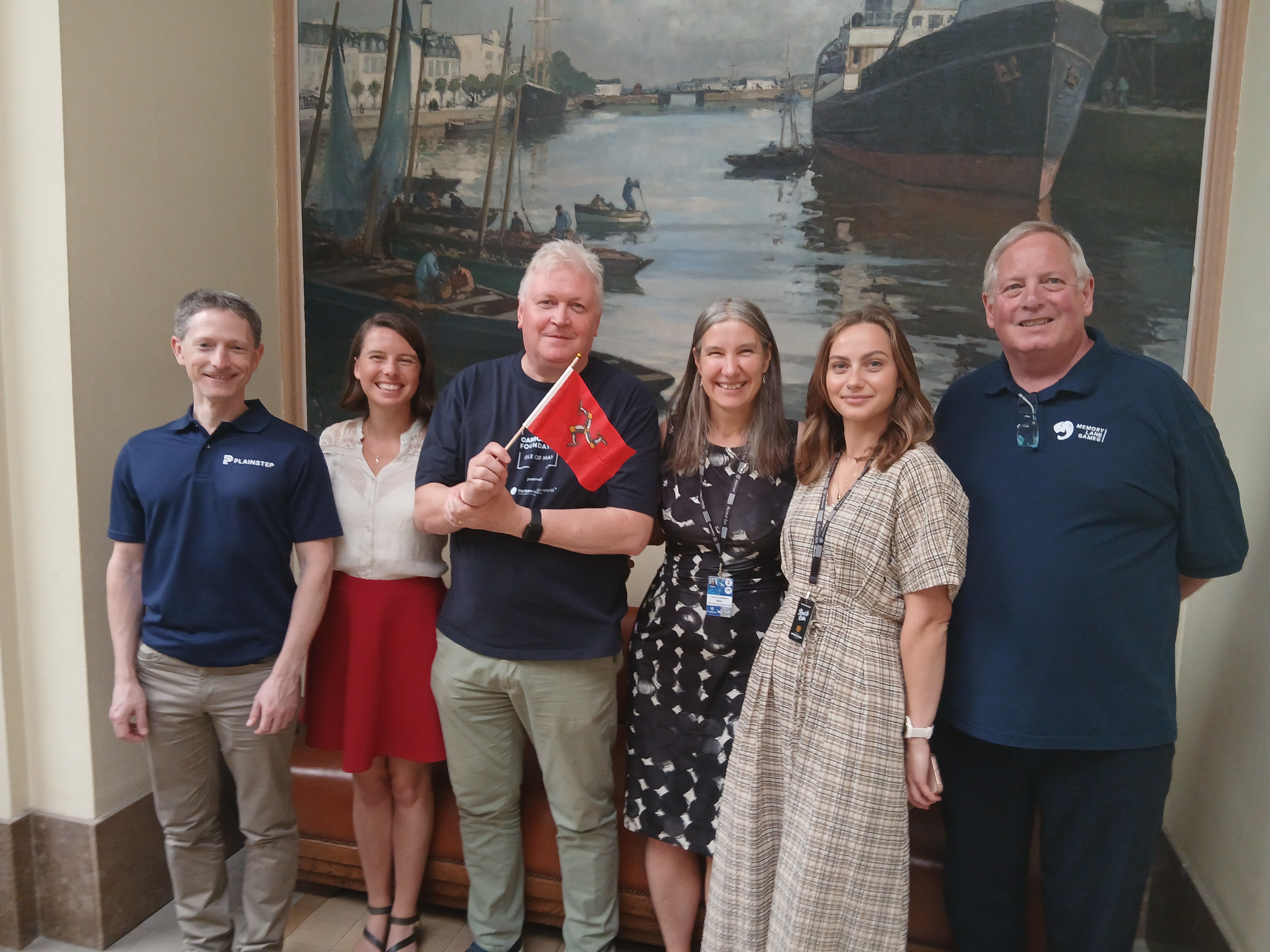
Discover what makes the Isle of Man a unique place to do business, from innovation and collaboration to UNESCO Biosphere status and quality of life.
Read More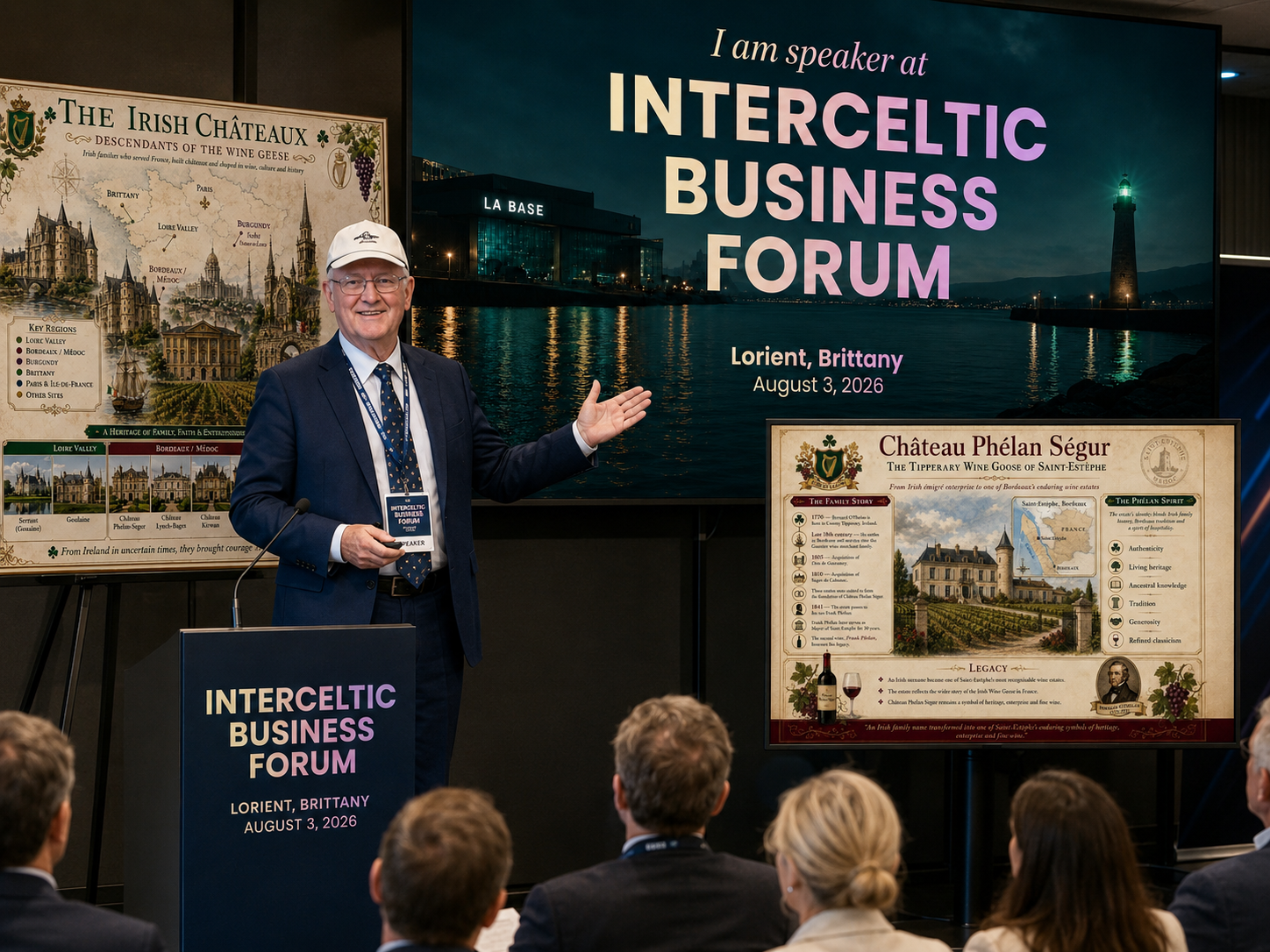
A pictorial history of the remarkable influence of Irish families and Irish châteaux on the French wine industry
Read More%20(1).jpg)
Irish fintech recognised for transforming digital customer experiences with no-code innovation and AI
Read More


